

Endodontics
in Calabash, NC
What Is Endodontics?
Endodontics is the branch of dentistry focused on diagnosing and treating conditions that affect the interior of the tooth — specifically the dental pulp and the tissues surrounding the root. The pulp is the soft tissue at the core of each tooth, containing nerves, blood vessels, and connective tissue. When bacteria penetrate the outer layers of a tooth and reach the pulp, infection can develop rapidly, causing significant discomfort and placing the entire tooth at risk.
Root canal therapy — the most common endodontic procedure — removes the infected or damaged tissue, cleans and seals the tooth's interior, and restores its function. Rather than extracting a tooth in pain, endodontic treatment saves it.
Signs You May Need a Root Canal
Many patients come to us after experiencing one or more of the following symptoms. If any of these sound familiar, we encourage you to call our Calabash office promptly:
- Persistent or severe toothache — especially pain that lingers or throbs
- Sensitivity to heat or cold that lasts well after the source is removed
- Pain when chewing or biting down on food
- Darkening or discoloration of a tooth
- Swollen, tender, or inflamed gums near a specific tooth
- A recurring pimple-like bump on the gum (known as a dental abscess or fistula)
- A cracked or fractured tooth that has exposed the inner layers
It's important to note that not every tooth requiring endodontic treatment will be obviously painful. Some infections develop gradually and may only be detected through X-rays during a routine exam. This is one more reason why regular dental visits matter.

What to Expect During Root Canal Treatment
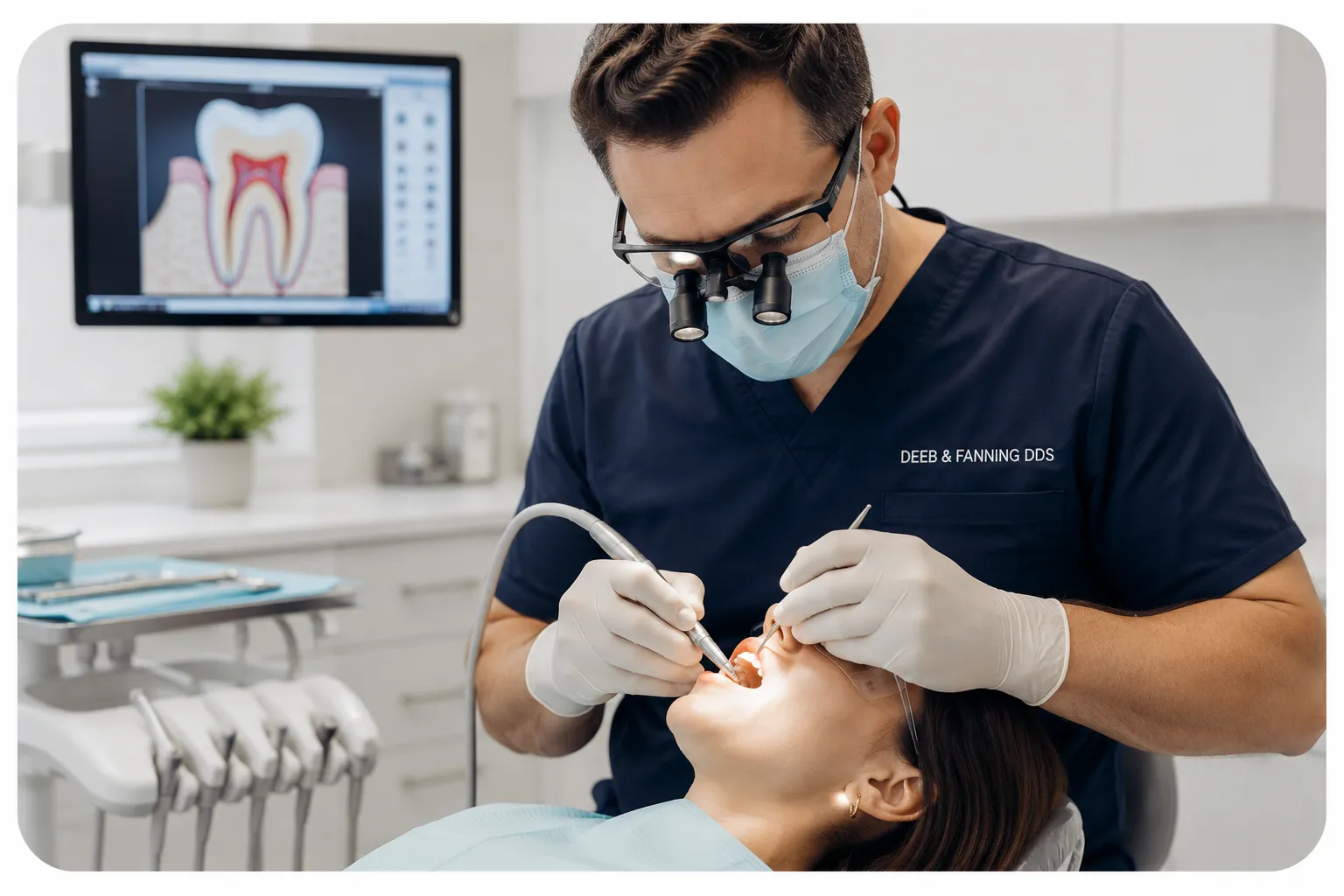
Modern root canal therapy at Deeb & Fanning DDS typically takes one to three appointments, depending on the severity of the infection and the complexity of the tooth's root structure.
Step 1: Examination and X-Rays We begin by taking detailed X-rays to assess the extent of the infection and map the shape of your root canals. This information guides the entire treatment plan.
Step 2: Anesthesia and Comfort Before beginning, we administer local anesthesia to thoroughly numb the area. Most patients are surprised to find that, once they're numb, the procedure causes little to no discomfort — often less than the toothache that brought them in. Our team is trained to ensure your experience is as calm and pain-free as possible.
Step 3: Removing the Infected Tissue A small opening is made in the crown of the tooth to access the pulp chamber and root canals. Using specialized instruments, we carefully remove all infected and damaged tissue from inside the tooth.
Step 4: Cleaning and Shaping the Canals The interior of each canal is thoroughly cleaned, shaped, and disinfected to eliminate any remaining bacteria and prevent reinfection.
Step 5: Sealing the Tooth Once the canals are clean and dry, they are filled and sealed with a biocompatible material called gutta-percha to prevent future bacterial entry.
Step 6: Restoration A tooth that has undergone root canal therapy is structurally more vulnerable than a healthy tooth, so we will typically recommend placing a dental crown to protect and restore it. The crown is matched to the color of your surrounding teeth for a seamless appearance.
Root Canal vs. Extraction: Why Saving Your Tooth Matters
Some patients ask whether it's simpler to simply extract a troubled tooth rather than pursue a root canal. While extraction is occasionally the right choice, preserving your natural tooth is almost always preferable when possible. Here's why:
- Your natural tooth is your strongest option. No replacement — implant, bridge, or partial denture — functions exactly like the original.
- Extraction creates a gap that can lead to surrounding teeth shifting, bite problems, and bone loss over time.
- The costs of replacement (particularly dental implants) often exceed the cost of root canal therapy and a crown.
- Recovery from extraction and subsequent replacement is typically longer and more involved than recovering from a root canal.
When root canal therapy is a viable option, we will always recommend it over extraction.
After Your Root Canal: What to Expect
It is normal to experience some mild soreness or sensitivity in the treated area for a few days following your procedure. Over-the-counter pain relievers are usually sufficient for managing any post-treatment discomfort. You should be able to return to normal daily activities the same day or the day after your appointment.
Until your permanent crown is placed, we recommend avoiding chewing hard or sticky foods on the treated side. Once your restoration is complete, care for the tooth just as you would any natural tooth — with regular brushing, flossing, and dental checkups.

Endodontic Care You Can Trust in Calabash, NC

At Deeb & Fanning DDS, we approach every root canal with the same care and precision we bring to all of our dental services. We know that dental anxiety is real, and we take extra time to make sure you feel informed, comfortable, and in control throughout your visit. Our goal isn't just to treat the problem — it's to help you understand what's happening and why, so you leave with confidence in your oral health.
We serve patients throughout Calabash, Sunset Beach, Ocean Isle Beach, Shallotte, and the broader Brunswick County area. New patients are welcome, and we offer convenient scheduling to fit your life.
Schedule Your Endodontic Consultation in Calabash, NC
Don't wait on tooth pain. The sooner an infected tooth is treated, the better the outcome. Contact Deeb & Fanning DDS today to schedule an appointment and find out whether root canal therapy is right for you.




.webp)